


Monoï de Tahiti Natural Roucou is an oily extract from Polynesian tradition. It is produced by macerating the seeds of the roucou tree in original Monoï de Tahiti and combines the nourishing properties of this traditional beauty oil with the protective and antioxidant properties of roucou.
Monoï de Tahiti itself is a protected product with Herkunftsbezeichnung (Appellation d’Origine). It is produced using traditional methods by infusing fresh tiare flowers (Gardenia tahitensis) in refined coconut oil (copra oil).
Der Roucou-Baum (Bixa orellana), auch bekannt als Annatto, Achiote oder Urucum, ist ursprünglich in Südamerika beheimatet. Den botanischen Name erhielt der Baum von Carl von Linné, wobei der Gattungsname vom karibischen Wort „bixa“ stammt und der Artname Francisco de Orellana ehrt, einen frühen Entdecker des Amazonas.
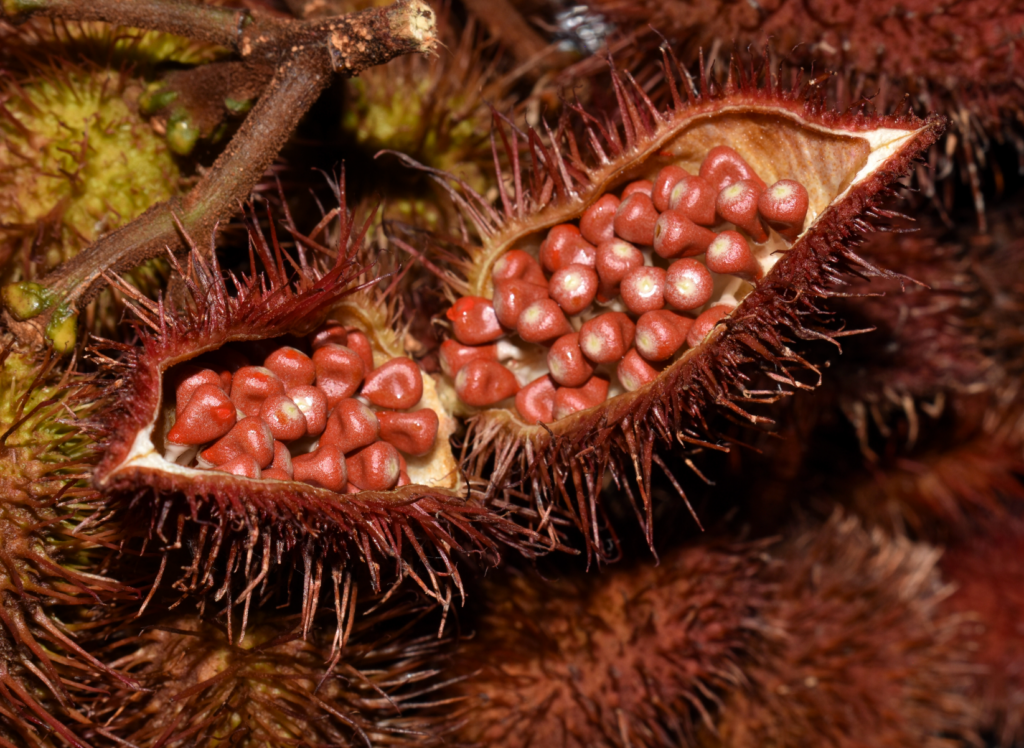

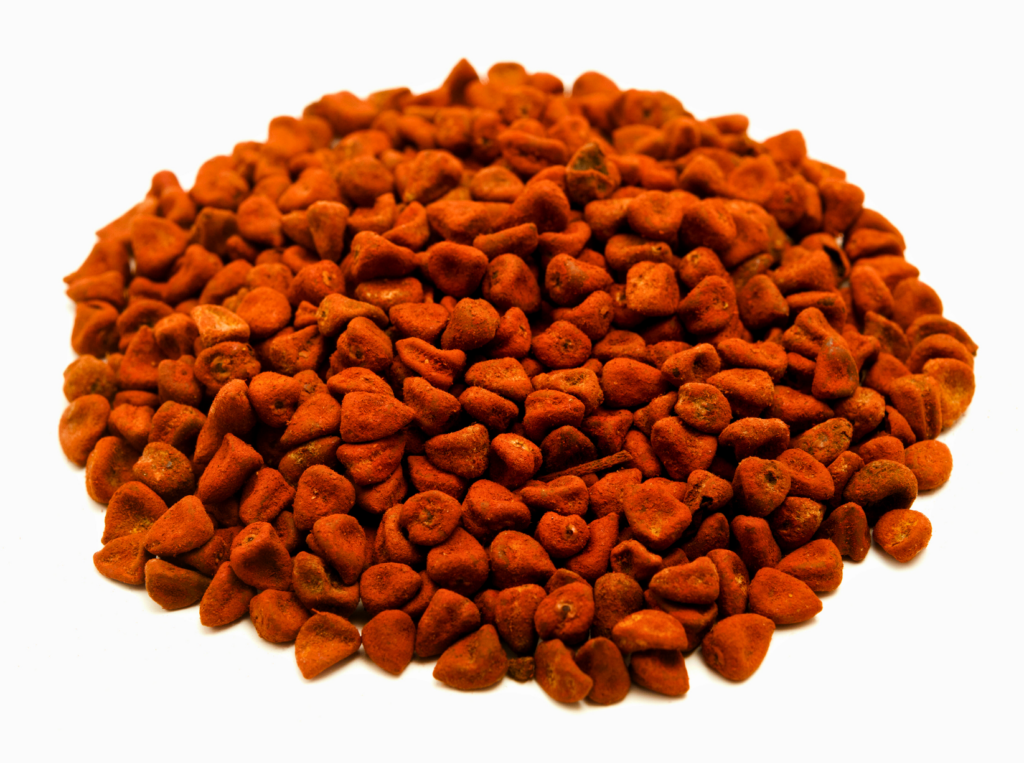
Die Samen zeichnen sich durch ihre intensive rot-orange Färbung aus und werden seit Jahrhunderten von indigenen Kulturen genutzt – sowohl zum Färben der Haut bei Ritualen als auch als natürlicher Farbstoff. Aufgrund dieser traditionellen Verwendung ist Roucou auch unter dem Namen „Lipstick Tree“ (Lippenstiftbaum) bekannt.
Roucou was introduced to Polynesia in 1845, although its presence in the Marquesas Islands dates back much further. There, women traditionally used the crushed seeds in combination with coconut oil to color the skin of dancers during ceremonies or as a vegetable dye. The painter Paul Gauguin also used roucou pigments for his works in Polynesia.
The coloring properties of roucou seeds are still used today. The main colorants, bixin and norbixin, are carotenoids that are officially approved for use in the production of organic foods in accordance with the EC Organic Regulation. Due to their good tolerability, they are used in the food industry, for example for the natural coloring of cheese, butter, or margarine. The seeds are also considered an ideal alternative to expensive saffron.

In cosmetic applications, roucou is particularly valued for its high carotenoid content. The seeds contain an exceptionally high level of beta-carotenoids—about 100 times more than carrots. Together with large amounts of selenium and highly potent tocotrienol (a form of vitamin E), these form a powerful combination of active ingredients that effectively protects against free radicals caused by solar and electromagnetic radiation. These natural plant substances are associated with antioxidant and photoprotective properties in the specialist literature. The beta-carotene it contains has a natural sun protection factor, slows down the aging process, supports collagen fiber production, and regulates the activity of the sebaceous glands. Roucou is therefore traditionally used as a plant-based active ingredient that protects the skin from external environmental influences and supports it in its daily care.
Monoï de Tahiti Natural Roucou is produced without synthetic fragrances. After macerating the roucou seeds in Monoï de Tahiti, the oil is gently extracted, filtered, and stabilized with natural vitamin E (tocopherol). The resulting oil extract has a warm, natural color and blends harmoniously into our cosmetic formulations.
This active ingredient is a particularly exclusive and unique component of Anakena face cream and body lotion. The combination of original Monoï de Tahiti A.O. and Roucou from the Pacific region gives it a character that is inextricably linked to the culture and nature of the South Seas and reflects the special origins and philosophy of Anakena.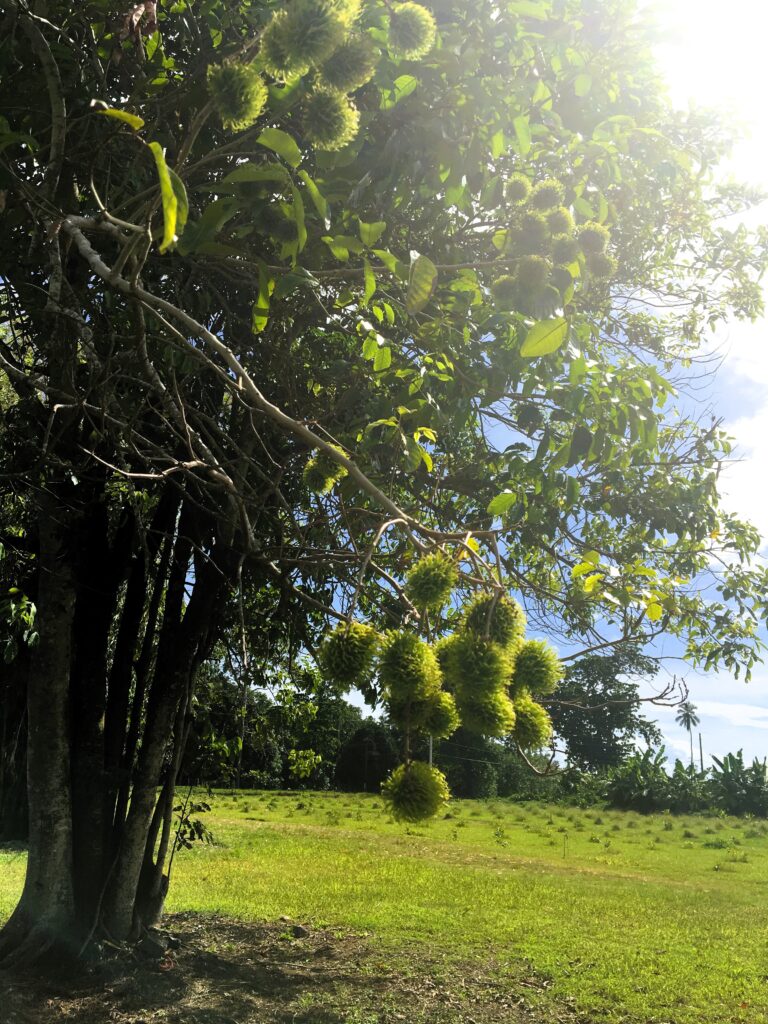

Bixa Orellana (roucou tree) on a plantation belonging to our raw materials manufacturer in Tahiti.
Cultivation
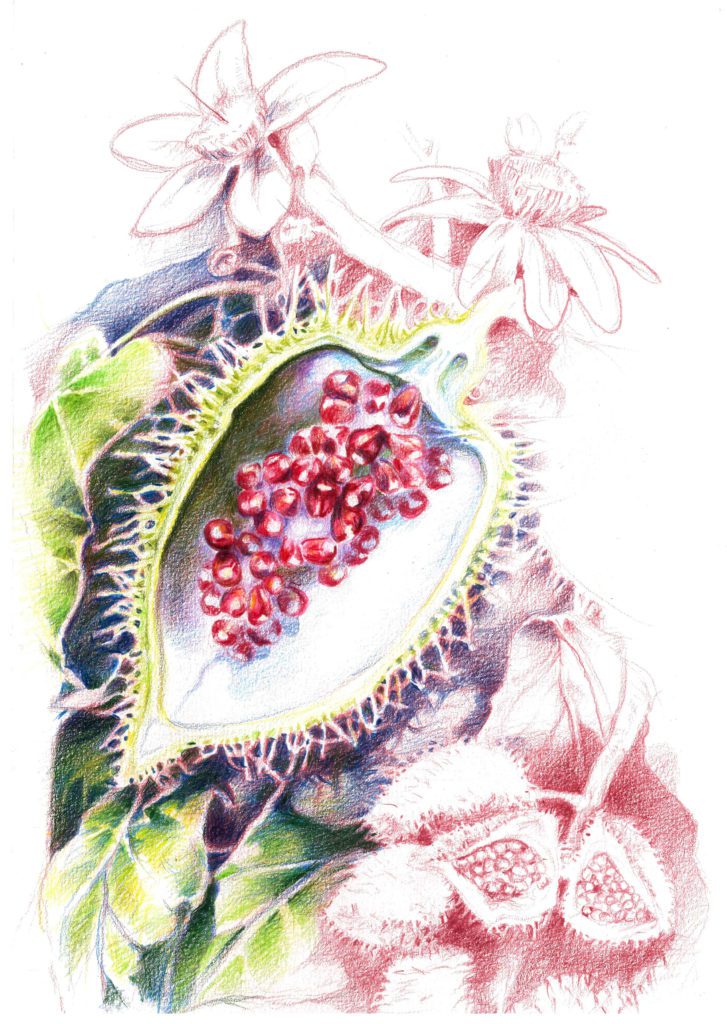
The roucou tree is propagated by sowing seeds. The seeds germinate easily within about two weeks. The plant is extremely productive – even small shrubs can produce up to 270 kilograms of seeds. The shrub reaches heights of 6 to 10 meters and bears clusters of 5 cm large, bright white or pink flowers at the tips of its branches, reminiscent of wild roses. Roucou thrives in warm, tropical climates and prefers sunny locations with good drainage and moderately fertile soil.
The capsule fruit of the roucou tree contains around 50 seeds with a vermilion-red shell. The capsule bursts open on its own when ripe, revealing the seeds, which are around three centimeters in size. The seeds are harvested, dried, and then processed. Their intense color and natural plant substance content have made them a valued raw material in various cultures for centuries.
Can be found in the following products: Face cream Anakena and Anakena body lotion